
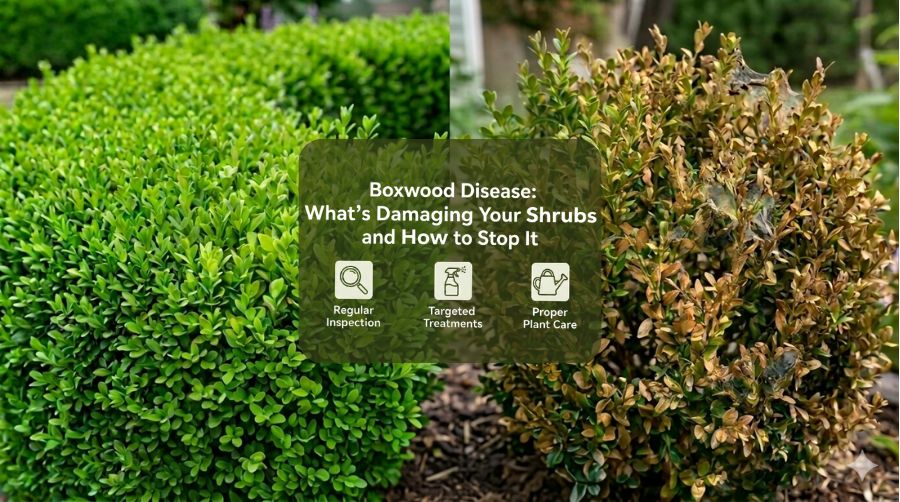
Boxwood Disease: What’s Damaging Your Shrubs and How to Stop It
Boxwood shrubs have long been a staple in residential landscaping for good reason: Their dense, evergreen foliage, clean lines, and ability to be shaped into decorative hedges make them one of the most versatile plants you can add to your yard! Boxwoods offer structure and year round color to both formal garden borders and foundational plantings.
In recent years however, homeowners across the Midwest have begun noticing a growing threat to these beloved bushes. Boxwoods that once looked full and healthy are suddenly thinning out, turning brown, and occasionally dying off completely! What was once considered a low maintenance, reliable shrub is now becoming a source of frustration for many property owners.
So what’s happening? And what can be done?
What’s Causing Boxwood Decline
The biggest culprit behind widespread boxwood damage is a tiny, destructive insect known as the box tree moth. Though appearing harmless at first glance, its larvae can quickly defoliate a shrub, leaving behind bare branches and weakened plants.
These caterpillars feed aggressively on boxwood leaves, often going unnoticed until significant damage has occurred. Often, homeowners only begin to notice the problem after sections of their shrubs begin to turn brown or appear skeletonized, with only veins remaining where full leaves once were.
To make matters worse, this pest can produce multiple generations in a single season, meaning subsequent waves may follow in spite of spotting early infestations.
In addition to insect damage, boxwoods are also vulnerable to fungal diseases such as boxwood blight. This disease spreads quickly in humid conditions and causes leaf spots, black streaking on stems, and rapid leaf drop. Once established, control proves very difficult.
The combination of pest pressure and disease puts boxwoods at real risk for healthy, thriving survival.
How Boxwood Problems Impact Your Landscape
Initially, boxwood damage might seem like a minor cosmetic issue: a few brown patches or thinning areas don’t seem urgent. However, these problems can quickly escalate, affecting more than just appearance.
Because boxwoods are regularly used foundationally in landscape design, their initial decline can disrupt the entire look of your yard. Once symmetry is lost, borders become uneven, and the clean aesthetic of boxwoods starts to break down.
Additionally, financial impact comes into play. Mature boxwoods take years to establish, and replacement can be pricey. Removing dead shrubs, purchasing new plants, and reestablishing a healthy landscape add up fast.
Beyond cost and appearance, unhealthy boxwoods can create ongoing maintenance headaches. Dead or weakened shrubs are more susceptible to further pest infestations and disease spread, affecting nearby plants as well.
In short, ignoring the early signs of boxwood trouble can turn a manageable issue into a much larger problem over time.
Longterm Effects of Untreated Infestations
Left untreated, boxwood pests and diseases can cause permanent damage. Severe defoliation weakens the plant’s ability to photosynthesize, limiting its energy production. Over time, this stress can lead to complete plant loss.
Even if a boxwood survives one round of caterpillar feeding, repeated infestations are common and can exhaust plants! If multiple cycles attack the shrub it may not recover.
Boxwood blight disease presents an even greater long-term risk. Fungal spores can persist in the soil and on plant debris, making reinfection likely without proper cleanup and management. In some cases, homeowners may need to avoid planting boxwoods in the same area altogether.
Another concern is the potential for quick spread, as pests and pathogens don’t stay confined to a single shrub. Without intervention, they can move across your landscape and even into neighboring properties, making early detection and management critical!
Prevention and Treatment Strategies
The good news is that while boxwood problems are serious, they’re not impossible to manage. With the right approach, you can protect your shrubs and even restore damaged ones.
Starting with regular inspection, carefully observe your boxwoods every couple of weeks, especially during the growing season. Check for signs like chewed leaves, webbing, small caterpillars, or unusual discoloration. Early detection makes a big difference!
If you suspect a box tree moth infestation, targeted insecticides can be effective when applied at the right time. Treatments are most successful when aimed at young larvae before they cause extensive damage; in some cases, multiple applications may be needed throughout the season.
Homeowners preferring a more hands-on approach can physically remove caterpillars or spray shrubs with a strong stream of water to reduce populations in early stages.
When it comes to disease prevention, proper plant care plays a major role. Boxwoods thrive in well-drained soil and benefit from good air circulation. Avoid overcrowding your shrubs and prune them as needed to improve airflow.
Efficient watering is also important. Overhead watering promotes fungal growth, so watering at the plant’s base is best. If you notice infected branches, prune them out promptly, disposing of the debris away from your yard.
Regularly cleaning up fallen leaves and plant material allows for necessary sanitation, which lessens the likelihood of disease spores and pests.
Finally, consider working with a professional lawn care provider to identify problems, apply treatments at the right intervals, and develop a long-term plan tailored to your landscape.
Common Questions About Boxwood Problems
Why are my boxwoods turning brown?
Browning can be caused by several factors, including pest damage, fungal disease, winter burn, or improper watering. If you notice chewed leaves or webbing, insects are likely the issue. If leaves are dropping with dark spots, disease may be to blame.
Can a damaged boxwood recover?
Yes, depending on the severity of damage. Light to moderate defoliation can often be reversed with proper care and treatment. However, severely damaged or diseased plants may need full replacement.
How do I know if I have box tree moths?
Look for small, green caterpillars with black stripes, along with webbing and chewed leaves. You may also notice moths around your shrubs, especially at night.
Is boxwood blight treatable?
Boxwood blight can be managed, but difficult to fully eliminate. Fungicides may slow its spread, but sanitation and removal of infected material are critical steps.
Should I remove affected shrubs?
If a shrub is heavily infested or diseased beyond recovery, removal may be the best option in protecting your landscape. Seek professional lawn care advice if unsure.
Protecting Your Landscape Moving Forward
Boxwoods are a beautifully valuable part of many landscapes, but they are no longer the “plant it and forget it” shrub they once were! Today, they require a bit more attention and care to stay healthy.
Staying proactive is key. Regular monitoring, proper maintenance, and timely treatment can go a long way in preventing serious damage. When caught early, most boxwood issues can be controlled before taking over your yard.
If your shrubs are already showing signs of stress, taking action now can save you time, money, and frustration down the road.
For homeowners in and around Galena, Ohio, Galena Lawn Care offers the full range of lawn and landscape services tailored to keep your property looking its best all year. Whether you’re dealing with struggling boxwoods or simply want to prevent future issues, our team is here to help you protect and enhance your outdoor space.