
Should you or should you not aerate the grass lawn? Let’s get answers
This guide will delve into the specifics of spring lawn aeration, seeding grass in spring, and how these practices contribute to superior spring lawn care in Galena, OH.
To understand the process and the right time for aeration, read on.
What is proper aeration?
For homeowners in Galena, OH, where soil types can vary, aeration is particularly important. Compacted soil restricts root growth and can lead to a lawn that is more susceptible to drought, disease, and weed invasion. By opening up the soil, you encourage deeper root development, leading to a more resilient and healthier lawn.
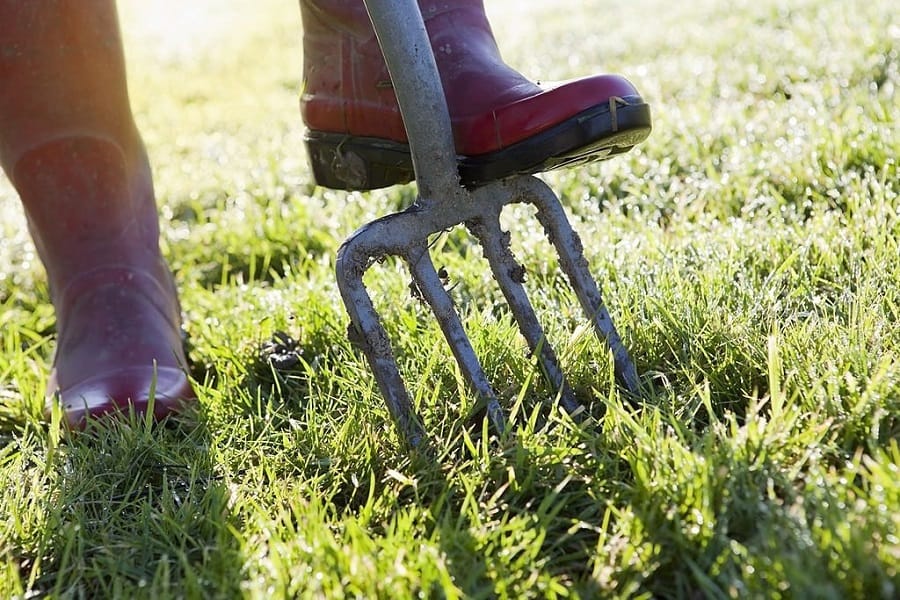
Core aeration is another popular term for this process. You can do this using a manual puncture or a motorized machine for large lawns.
While fall is often cited as the best time to aerate and overseed the lawn, spring aeration offers distinct advantages. Aerating your lawn in spring, particularly in late spring, can help break up the soil that may have become compacted over the winter months due to foot traffic or heavy snow. This process prepares the soil for the upcoming growing season, ensuring that new grass seed has an optimal environment to germinate and establish.
When is aeration suitable for lawns?
Late spring aeration is a beneficial technique to alleviate poor lawn conditions. It is more suitable if the turf is thin and is quite tight. March to May in the late spring is considered the ideal aeration period.
Spring overseeding is the best time to aerate and overseed, increasing germination rates.
What is the best time to seed the yard?
Seeding is the second step for growing anything in the yard. The foremost step is the preparation of the yard. The preparation includes aeration, and the best time to seed is the start of the Fall season. Early fall and early spring are two times of the year when you can consider seeding.
For Ohio residents, understanding the optimal timing for seeding grass in Ohio is key to success. While early fall is generally considered the prime time for overseeding due to cooler temperatures and less weed competition, early spring can also be a viable option, especially after aeration. The ideal window for spring seeding is typically from mid-March to mid-May, once the danger of hard frost has passed and soil temperatures begin to consistently reach above 50°F.
This timing allows the new grass seedlings to establish before the heat and potential drought of summer set in. It’s important to choose a grass variety that is well-suited to Ohio’s climate and your specific lawn conditions.
How to Aerate and Seed a Lawn in Spring
The process of how to aerate and seed a lawn in spring is straightforward but requires attention to detail:
- Timing: Aim for late spring, after the lawn has started to green up and the soil is moist but not waterlogged. This is typically between April and May in the Galena, OH area.
- Aeration: Use a core aerator to create holes approximately 1/4 to 1/2 inch in diameter, spaced about 2-3 inches apart. Allow the soil cores to dry on the lawn surface; they will break down naturally and return nutrients to the soil.
- Overseeding: Spread your chosen grass seed evenly over the aerated lawn. Use a spreader for consistent application. Ensure the seed falls into the aeration holes.
- Raking (Optional): Lightly rake the seeded areas to further improve seed-to-soil contact, especially if you have a lot of thatch.
- Fertilizing: Apply a starter fertilizer designed for new grass. This will provide the necessary nutrients for germination and early growth.
- Watering: Keep the newly seeded areas consistently moist. Water lightly but frequently, ensuring the top inch of soil remains damp. Avoid heavy watering that can wash away the seeds.
- Mowing: Once the new grass reaches about 3 inches in height, you can begin mowing. Set your mower to a higher setting and avoid cutting more than one-third of the grass blade at a time.
Should I Aerate My Lawn in Spring or Fall?
The question of whether I should aerate my lawn in spring or fall. often arises. Both seasons offer benefits:
- Spring Aeration: Best for relieving winter compaction, improving soil structure before the growing season, and preparing for spring seeding. It can help wake up dormant grass and encourage new growth.
- Fall Aeration: Generally considered ideal because it allows grass to recover from summer stress and prepare for winter. It also provides excellent conditions for overseeding, as cooler temperatures and increased rainfall promote seed germination and establishment with less weed competition.
For most lawns, a combination of both spring and fall aeration can be highly beneficial. However, if you must choose one, fall is often preferred for overseeding success. If your primary concern is addressing spring compaction and preparing for spring growth, then spring aeration is a good choice.
Frequently Asked Questions (FAQ) about Spring Lawn Aeration and Seeding in Galena, OH
Q1: Can you really aerate your yard in the spring?
Yes, absolutely! Aerating the lawn in spring is a beneficial practice, especially in late spring, to alleviate soil compaction and improve air and water penetration before the peak growing season.
Q2: What is the best time to aerate and overseed a lawn in Ohio?
While fall is often ideal, late spring (April-May) is a good time for aeration and overseeding in Ohio, particularly if you missed the fall window or need to address spring compaction. The key is to ensure soil temperatures are suitable for seed germination and that the new grass has time to establish before summer heat.
Q3: How do I know if my lawn in Galena, OH, needs aeration?
Signs your lawn needs aeration include: compacted soil (difficulty inserting a screwdriver), thin or patchy grass, excessive thatch buildup, and water pooling on the surface after rain. If your lawn feels hard underfoot, it’s likely compacted.
Q4: What type of grass seed is best for spring seeding in Ohio?
Cool-season grasses like Kentucky Bluegrass, Perennial Ryegrass, and Fescues are well-suited for Ohio’s climate. Consider a blend that matches your existing lawn or offers improved drought tolerance and disease resistance.
Q5: How often should I aerate my lawn?
For most lawns, aerating once a year is sufficient. If your lawn has particularly heavy clay soil or experiences significant foot traffic, you might consider aerating twice a year (spring and fall).
Q6: Will overseeding in spring work as well as fall overseeding?
Spring overseeding can be successful, but it generally faces more challenges than fall overseeding. The primary concern is the onset of summer heat and potential drought, which can stress young seedlings. However, with proper watering and care, you can achieve good results.
Q7: What are the benefits of core aeration in spring?
Core aeration in the spring helps to break up soil compaction that occurs over winter, improves the soil’s ability to absorb water and nutrients, reduces thatch, and creates an ideal environment for new grass seed to germinate when overseeding.